
How Image Personalization in Emails Increases Conversions
Image personalization in emails is one of the most effective ways to increase conversions from your campaigns. Find out how – and get started for free.
 First Publish Date:
 A picture's worth a thousand words. Even in the digital world. Despite short form video becoming the undisputed king and queen of social media marketing, images are still the bedrock of a good email campaign – because they can be fully personalized and matched to the recipient. So, how is image personalization in emails able to increase conversions so effectively?
Of all the tools in an email marketer's toolbox, personalization is the most powerful. It's also the biggest and most unwieldy, and can take a long time to set up. Beyond basic profile data (like name and date of birth) are the email personalization tactics that actually convert; serving personalized content based on behavioral triggers, location, and engagement. Image personalization in emails is one of the most effective ways to increase conversions from your campaigns – and with a tool like Sendtric, is now just as easy as the basics.
Key Takeaways
- Personalized images in emails can increase conversion rates by 103% compared to generic visuals
- Dynamic imagery in emails can be tailored based on purchase history, browsing behavior, location, weather, and even real-time intent signals like cart abandonment
- 91% of consumers say they are more likely to shop with brands who recognize, remember, and provide relevant offers and recommendations
- Platforms like Sendtric allow marketers to create dynamic images, rapidly and at scale, without complex coding
- Using first-party data like name, location, and purchase history to customize images feels helpful, not invasive, and adds clear value
- Animated images and GIFs have been shown to increase email engagement and conversion rates, and add personality to campaigns
- Emails with image-based CTAs report higher conversion rates. Personalized CTAs deliver 202% higher conversion than generic versions
What is Image Personalization in Emails?
Before we get going, let's quickly recap image personalization in emails. As you might have guessed, it involves putting personalized images into every recipients' marketing emails – but instead of manually creating and adding each one, the images are dynamically created and inserted into emails automatically [1].
It's a powerful tactic that makes emails feel custom-made for each user.
Personalized images in emails work by tapping directly into CRM data [2]. From here, name, location, or even a specific product can be added directly within the dynamically generated image itself.
The most advanced personalized images are created from trigger behaviors in real-time [3]. For example, an image in a cart abandonment email can automatically show the exact product a customer left behind. It can also be based on items in a wishlist, recently browsed items, and then combined with sales and offers to majorly incentivize a purchase.

Frequent or recent purchases by users can also be featured, driving repeat sales.
Using names and birthday well-wishes are powerful tools, but image personalization in emails can do so much more. It can be used to target customers based on their interests and purchase intent, nudging them toward a sale.
All together, image personalization makes emails feel incredibly relevant and personal, significantly boosting engagement and conversion rates.
By how much, you ask? Let's get into that next…
How Image Personalization in Emails Drives Conversions
The impact of personalized images on the most important email marketing metrics is undeniable – the data don't lie. There is a clear link between image personalization and improved engagement, higher conversion rates, and more efficient campaigns [4]:
| Metric | Impact |
|---|---|
| Conversions | +103% |
| Revenue | +109% |
| Conversions with Personalized CTAs | +202% |
Increase in Conversions
Ultimately, the goal of any campaign is to increase revenue. Image personalization is proven to do this – just check out our post 9 Email Personalization Examples That Actually Convert to learn more.
It works because image personalization is super compelling for users; imagine seeing the very product you've been wanting for a while, land in your inbox, with a sale promotion, or just after payday… Timed properly, they're rocket fuel for conversions.
Targeted, relevant visuals like this help bridge the gap between interest and purchase – especially when paired with behavioral data and rules-based triggers.
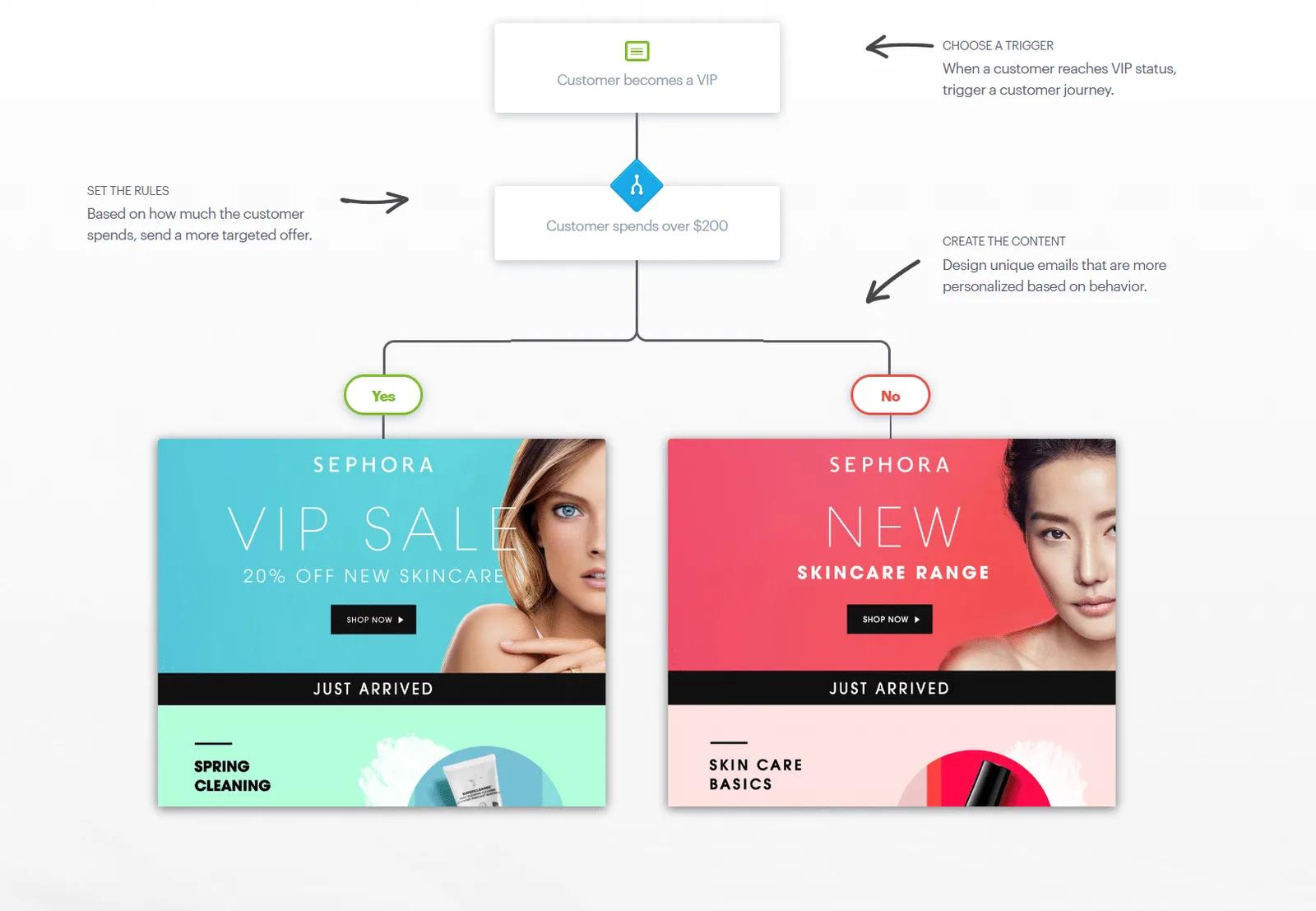
By addressing customers directly with personalized offers and products they actually want, brands can achieve a direct, significant revenue impact. All they have to do is track and log how users browse – or just scrape users' wishlists to get all the data they need.
Companies that excel at personalization at scale generate 40% more revenue than companies that don't [5]. That might make it seem like it's rigged for bigger players, but personalization is great for any size of business. It's a far leaner way of working, and the extra efficiency just happens to scale well.
Personalized CTAs are another tool to use in the personalized image toolbox. They can produce a 202% higher conversion than generic CTAs [6], and become impossible to miss compared to text-based CTAs.
The bottom line is just one improvement that personalized emails offer. The fringe benefits that feed into future conversions and revenue are the real bonus.
Improved Engagement
Personalization makes emails more relevant, and relevance drives action. More engagement means more customers browsing, sharing, wishlisting – and eventually, buying.
Personalized emails mean future rewards for brands, through increased engagement. 91% of consumers say they are more likely to shop with brands who recognize, remember, and provide relevant offers and recommendations [7].
Engagement can be boosted even further by using the right type of visuals. Using a GIF in an email not only adds personality, but it has also been shown to increase email conversion rates. Dell's famously GIF-heavy campaign gained them a 103% increase in conversion rate, and a 109% increase in revenue [8].
Real-time Campaign Optimization
Image personalization tools also allow for real-time optimization at scale.
With dynamic images, a single campaign can be broken down into thousands of unique visual experiences. The technology makes it possible for the recipient's specific data to be pulled in to render a unique image on-the-fly – reducing resource use and maximizing efficiency (more on this later).
This level of customization used to be a major burden for development teams, but now tools like Sendtric's image personalization widgets handle all the heavy lifting. Our email image overlays automatically show the right text and image to the right person, which means you don't have to create multiple versions of your campaign just to change the text displayed. Instead, you design one email, and we handle the rest: swapping in the right text for each person who opens it.
For small teams, this gives you a level footing with the bigger fish in your pond.
For a large enterprise, this means a leaner marketing team can deliver the most engaging visuals to each segment of their audience, making the entire campaign more efficient and effective.
How Does Image Personalization Work?
Image personalization in emails is now far simpler than it used to be, thanks to a huge range of specialized tools – including our own!
Email image personalization is a technical process that replaces a static image in an email with a dynamic one, tailored to each recipient. The magic happens through a specialized image URL that contains "variables". These are placeholders for data, like a customer's name and location, or a product ID.
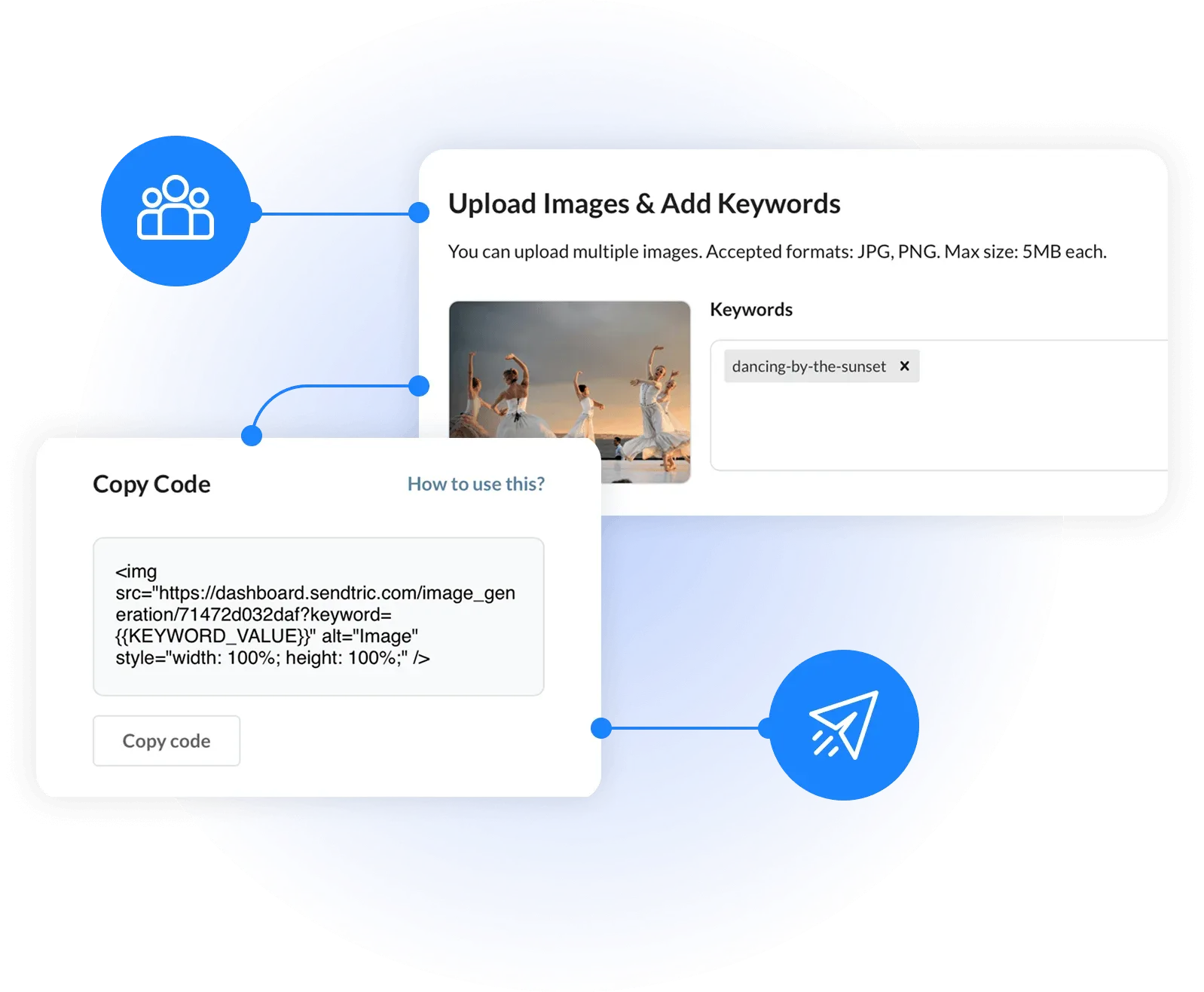
When a recipient opens the email, the email client sends a request to a server. The server reads the variables in the URL, pulls the corresponding data from your customer database in real-time, and uses the specified image assets to pair with it. It then combines them to generate a unique image instantly, just for that person.
This entire process happens in milliseconds – and the recipient sees their personalized image as the email opens, without any significant latency.
To make this work, you'll need your email service provider (ESP) and CRM to pull in customer data and generate dynamic visual content. And tools like Sendtric make adding image personalization into your emails as easy as any other customization.
If you're part of a larger enterprise, you'll need to lean on your CDP, a dynamic content platform, and a delivery system that can handle image rendering at scale. Sendtric is equally up to the task for large organizations as it is for small ones – with some of the biggest names in entertainment, retail, tech, and lifestyle trusting our platform to deliver personalized and dynamic content to their email lists.
Learn more about creating Personalized Images for Email Campaigns with Sendtric
In large enterprises, a CDP acts as a central repository for all customer information, including behavioral data like recent purchases, abandoned carts, and browsing history.
Sendtric can connect directly to your CDP, allowing you to create sophisticated rules-based images for email. Deep segmentation decides which visuals each customer receives. For instance – a rule might say, "If a customer viewed hiking boots in the last 24 hours, show them an image of those boots with a personalized discount banner", or something similar. You could also add in more information, like stock levels, to add a sense of urgency to your emails.
Modern ESPs are designed to work seamlessly with dynamic image URLs, and Sendtric works with all major platforms.
The ESP's job in all of this is replacing the variables in your image URL with the correct values from your customer profile, so that each recipient sees their own personalized version of the image. This means integrating with your CDP and/or CRM – and basically all ESPs make this as easy as possible, either through documentation or simple visual editors.
Sendtric Makes Image Personalization in Emails Easy
Sendtric gives you the power to supercharge your email marketing. You get a suite of tools to deploy advanced email personalization, without complex coding or development resources.
With Sendtric, you can easily integrate personalized images that dynamically change based on subscriber data – or email countdown timers that display the exact remaining time for a personalized offer. You can generate interactive polls inside emails, and email weather widgets that pull real-time conditions for localized campaigns.
These widgets are designed to work seamlessly across all major email clients, across desktop, mobile, or tablet, integrating effortlessly with your email campaign platform.
Sendtric's suite of tools are enterprise-class, highly resilient, and trusted by brands you know and love – from multinational organizations that send over 300 million emails per month, to startups and small businesses.
That's why all our tools are included in every pricing tier – even our free plan.
Try it now for free – create personalized images for email
Frequently Asked Questions
What is image personalization in email marketing?
Image personalization is the practice of dynamically changing the content of an image in an email to suit the individual recipient. This can include their name, a product they viewed, their location, or their purchase history, making the email feel more relevant and tailored.
How much can image personalization increase conversion rates?
The impact is significant. Some forms of image personalization have been shown to boost conversion rates by 103%.
What kind of data do I need to personalize images?
You need clean, first-party data on your customers. This includes basic details like name, location, and date of birth, as well as behavioral data like purchase history, browsing behavior, and cart abandonment. A CRM or CDP is essential for centralizing this data. Learn more in our blog on creating personalized emails.
What tools can help me create personalized images in emails?
There are many user-friendly tools designed for this purpose. Sendtric specializes in creating dynamic images and countdown timers, and integrates seamlessly with enterprise-level CDPs, as well as all major ESPs and CRM platforms.
Can I personalize images for abandoned cart emails?
Yes! This is actually one of the most effective use cases. You can use dynamic images to show the exact product a customer left behind in their cart, along with a personalized message.
Are animated GIFs effective in email marketing?
Yes. GIFs can significantly boost engagement and conversions, with some data showing a 109% increase in revenue. They add personality and can grab attention in a crowded inbox. However, it's best to keep the file size manageable (around 1MB) for faster loading. Sendtric is particularly good at streamlining lightweight image file delivery, at scale and at speed.
How do I set up image personalization for a large enterprise?
For enterprise scale, you need a strong tech stack. This includes an enterprise-class CDP to unify customer data, an ESP that supports dynamic content, and a powerful image management and personalization platform. This allows you to automate the creation and delivery of personalized images for millions of recipients.
How do image-based CTAs compare to text-based CTAs?
Image-based CTAs generally report higher conversion rates (+202%) than simple text links. Because they are more visually compelling and can be personalized, they stand out more and are practically impossible to miss in an email. It's important to have a text-based fallback, just in case.
Sources
[1] https://www.sendtric.com/personalized-images-for-email/
[2] https://www.litmus.com/blog/how-to-create-inspiring-personalized-emails#personalized-images
[3] https://www.sendtric.com/best-email-personalization-tools/
[4] https://www.sendtric.com/personalization-examples-that-actually-convert/
[5] https://www.contentful.com/blog/personalization-scale/
[6] https://sqmagazine.co.uk/personalized-email-marketing-statistics/
[8] https://www.zerobounce.net/blog/email-resources/email-marketing/gifs-in-email