
Most Unique Email Personalization Examples in 2026
What's cut through the most in email marketing and email personalization? Use our top picks from 2026 so far, to inform your fall and holiday marketing plans.
 First Publish Date:
 What a year. So far, 2026 has been huge for marketing and communications. But what's cut through the most in email marketing and email personalization? As we break through the summer peak and head into Q4, it's time to take stock of the most unique email personalization examples so far in 2026. Check out our top picks, and use them to inform your fall and holiday marketing plans. Who knows – maybe this could inspire your next email campaign?
By now, you know that email personalization is the rocket fuel behind the biggest and most successful campaigns. But hasn't it all been done before? If you think you've already used every trick in the book, think again – because the brands on the bleeding edge are taking creativity into new territory, creating the most unique email personalization examples in 2026.
Key Takeaways
- AI agents are an excellent use of AI in email marketing. They can replace rigid segmentation rules, without overwriting your team's creativity. Luxury Escapes used agentic AI to weigh multiple behavioral signals simultaneously, for smarter customer targeting.
- Privacy-first personalization is a competitive advantage. Brands like Etsy are using opt-out campaigns to let subscribers self-segment, building trust and improving engagement metrics
- Personalization at scale is now achievable – even for small teams. Plugin Boutique generated over 250,000 clicks and a 248% increase in email content revenue by using dynamically-generated blocks.
- Zero-party data, preference centers and opt-out campaigns empower subscribers to share what they want, enabling deeper personalization without privacy concerns. This can make campaigns around sensitive times (Mother's Day, Father's Day, and more) feel more inclusive.
The most unique email personalization examples of 2026
Let's jump straight into the best and most unique email personalization examples we've seen so far, and unpack their results.
1. Luxury Escapes
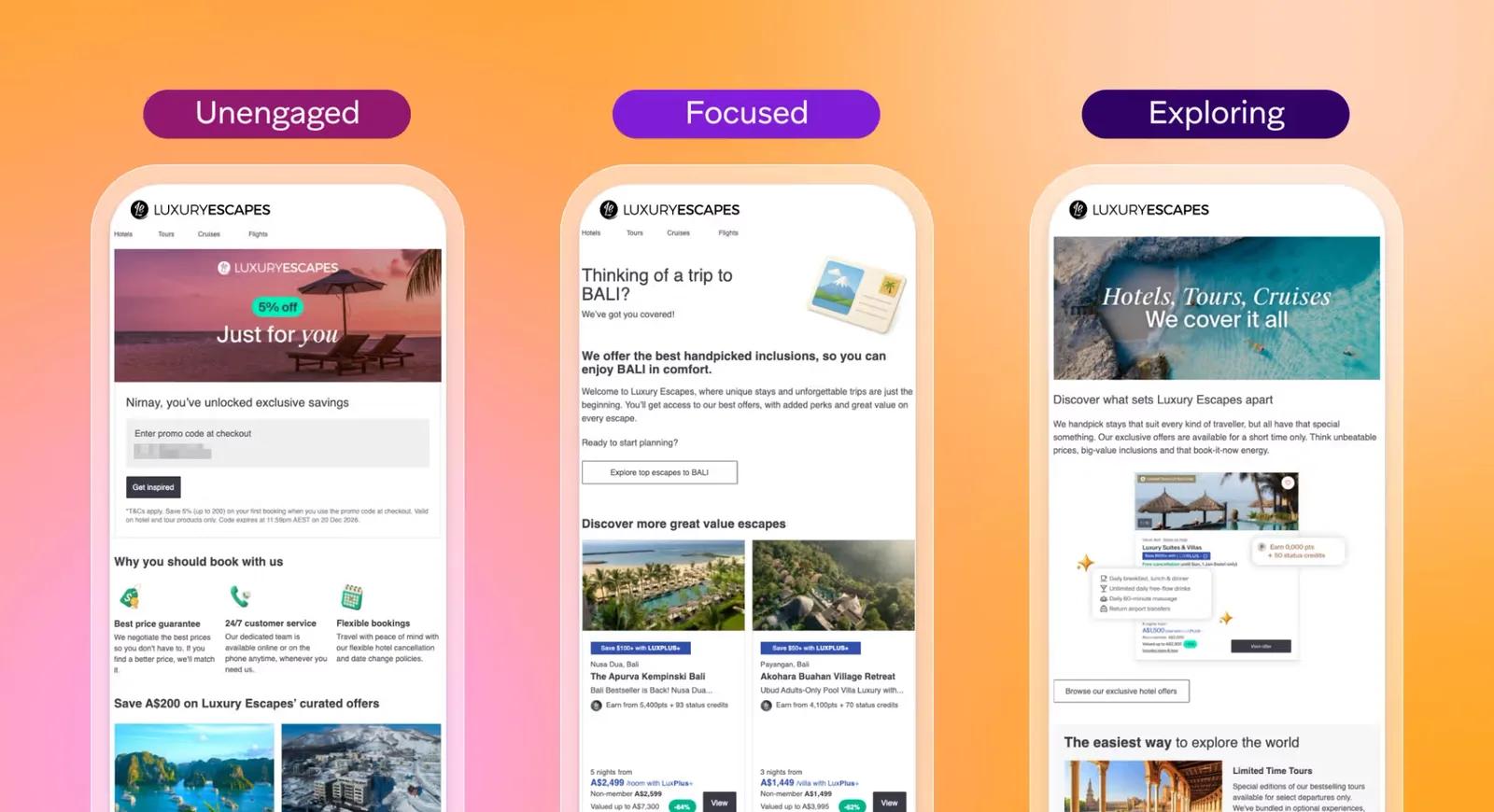
Luxury Escapes is a niche and luxury travel booking platform based in Australia, with over 9 million global members. They faced an email personalization challenge – how to segment new users effectively with limited behavioral data. They found their answer in AI agents, but the brainwork came from their team first.
They set up a rules-based email personalization approach divided users into three groups, based on session count after signup:
- Unengaged (zero to one sessions)
- Explored (one to three sessions)
- Focused (more than three sessions)
Each group received a tailored welcome email. This experiment alone delivered a 12% increase in orders [1] compared with their previous catchall approach, but the team knew they could do better. They were tracking browser data deeply, with ten distinct website events (screen views, page views, search counts, product impressions, product clicks, and more) – but they couldn't fold that rich data into the logic without rewriting rules from scratch.
Their solution? Deploying an AI agent to make those decisions. Instead of creating fixed rules, they gave the agent instructions explaining what each event meant, and let it evaluate each user's aggregated activity to assign them to the right group. The agent didn't need training data, just clear instructions and the right signals.
The agent-based segmentation produced a 10% lift in revenue per user compared to the rule-based control group, driven entirely by conversion rate. It also drove a 7% increase in total transaction value and 6% increase in purchase volume [1].
This is an awesome example of email personalization using AI. The AI agent doesn't write a single line of copy, or create any imagery – that was all real work, by real people. The agent simply figured out which segment a user belonged to based on a data dump of signals. This would have been impossible for the team, but it's no problem for the AI.
2. Plugin Boutique: email personalization delivers 7x ROI

Plugin Boutique is the world's biggest music software marketplace, with over 9,000 products for sale from 300+ brands. They faced a challenge common to specialist retailers: their customers already knew exactly what they wanted, and noticed immediately when a recommendation missed the mark.
They had the data to fix this, but with a small marketing team sending at least one campaign daily, they couldn't manually segment every email. Their solution? Instead of segmenting their email list, they send to their full database and let personalization blocks make every campaign feel relevant to whoever's reading it.
The team implemented personalized product recommendation blocks, which pull in products based on browsing history and price point preferences. They also added a welcome email series that surfaces trending products, and items under $20 for first-time buyers.
They continued the email personalization on the website – adding a homepage section with "Jump back in" and "Recommended for you", all powered by the same behavioral signals. This seamless transition from email recommendation to website relevance was the lubricant for easier purchases.
The result? A 248% increase in email content revenue year-on-year, with over 250,000 clicks generated by personalized email blocks alone [2]. For a team of two, that's pretty incredible, and works out at a 7x return on investment. This is how you do personalization at scale, without a massive team.
3. SoFi: fun and finance – together at last!
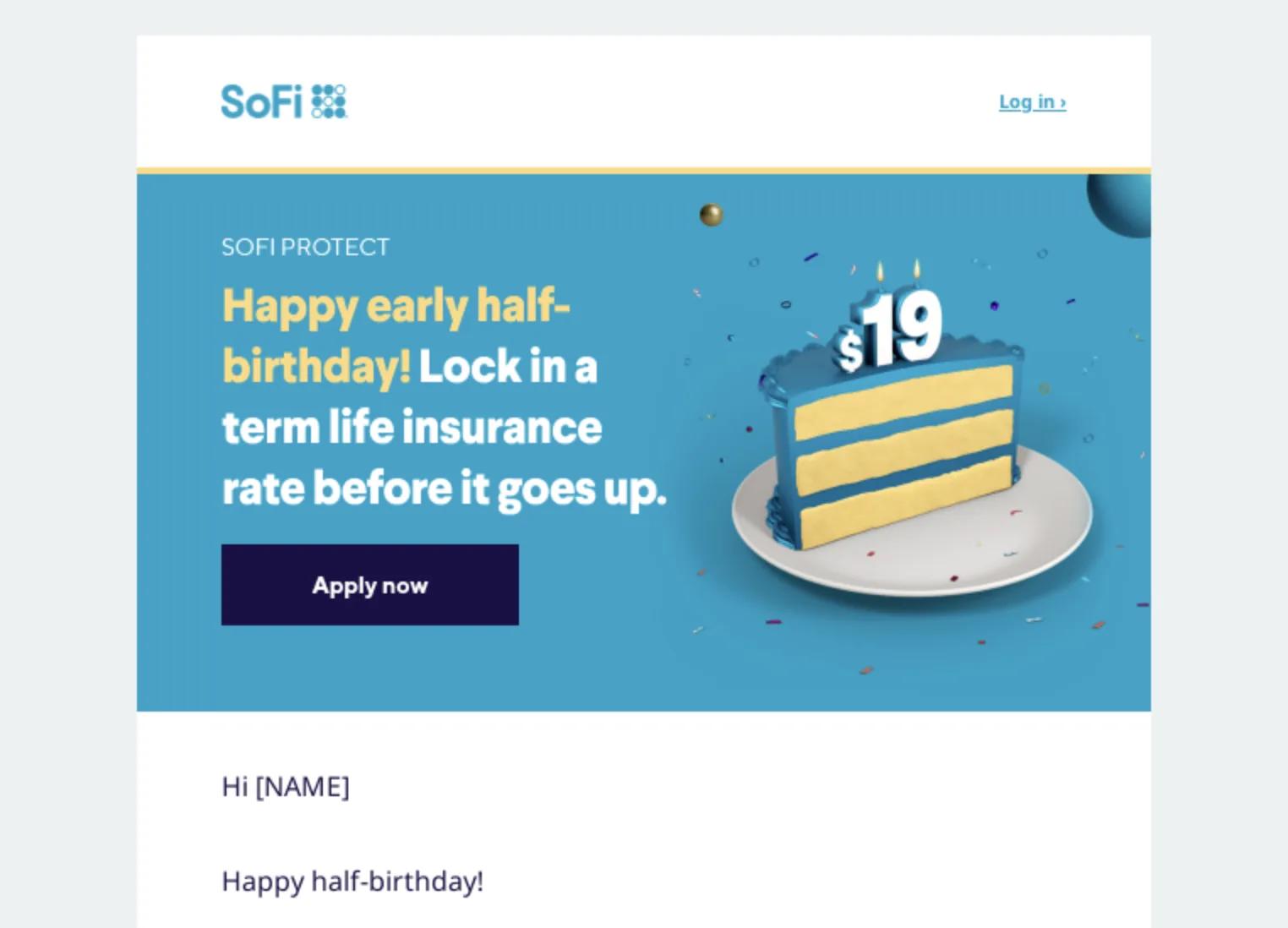
Financial services might not be the first industry that comes to mind for creative personalization, but SoFi bucks the trend. SoFi is a digital financial services provider that, rather than staying dry and safe with their email marketing, plays around with customer data. And when they send birthday emails, they do it with a twist.
Instead of a birthday offer, they wish users a happy "half-birthday". Life insurance rates are tied to a person's age, so SoFi uses the half-occasion to remind users to lock in cheaper rates and save more money [3]. We don't have the results available for this one, but it certainly is a unique and memorable twist on an age-old birthday campaign – so it's made its impression on us, at least!
4. Center Parcs – Love in All Forms
Valentine's Day is one of the most personal holidays, and one brand stood out in 2026 for broadening its definition. Love in All Forms was a campaign by European vacations brand Center Parcs, which argued that Valentine's Day doesn't have to be exclusively romantic.
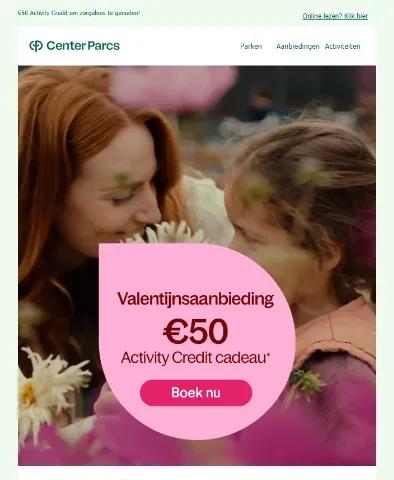
The brand kept its familiar green color scheme but shifted to pink for the campaign, maintaining brand recognition while feeling special. Visuals featured families, couples, and people with their dogs – love in many guises. And because each email is addressed to the family rather than the individual recipient, it's a different and more meaningful way of personalizing emails [4].
5. Etsy – the Opt-Out campaign
Staying on the Valentine's theme, Etsy's Valentine's Day campaign deserves a spot on this list as one of the most unique personalization examples of 2026.
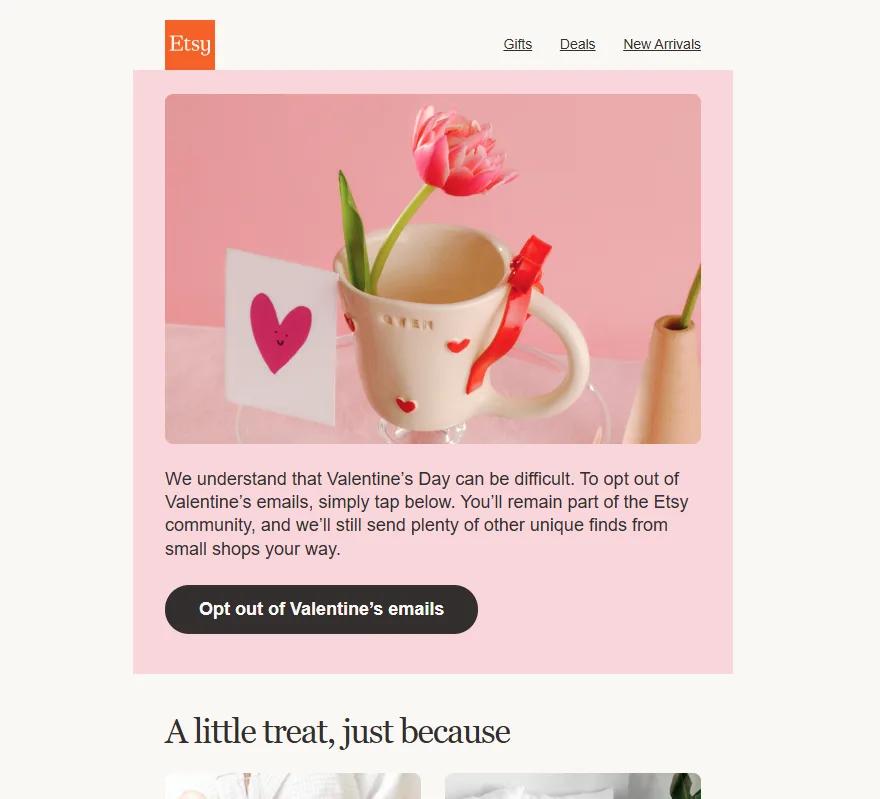
Etsy is an online marketplace for indie brands and small companies, bringing unique products from small makers to the world. It's a popular retailer for unique, tailored, and handmade gifts over Valentine's, but it's by no means the only thing they do. And if you're single (or widowed, or going through a big messy breakup – or just done with love), then Valentine's content is probably the last thing on your list of needs.
So, rather than guessing who wanted Valentine's Day content, Etsy asked – and listened [5].
The campaign was simple but effective. Customers get a clear, honest subject line, an explanation of what was coming, and a single, easy choice: opt out of Valentine's emails, or stay in the list. It's neutral, non-judgemental, matter of fact. Perfect.
We love this approach, because while most brands would focus on what to send over Valentine's, Etsy focused on what not to send. It's a masterclass in respectful segmentation that builds trust and improves engagement metrics simultaneously.
Why does email personalization matter?
Still not convinced that email personalization matters? Well, let's look at the facts: personalization remains the most powerful move in an email marketer's playbook.
Personalized emails generate higher transaction rates, and a 77% share of email marketing ROI comes from segmented, targeted, and triggered campaigns [6].
Segmentation alone drives 30% higher open rates and 50% more click-throughs compared to unsegmented campaigns [7]. But the game has evolved. Basic personalization, like using a first name in the subject line, isn't what it used to be – and in some cases, can set you back.
The brands winning in 2026 are those mining behavioral data to create relevance that feels essential, without intruding on privacy. Let's learn more about privacy in a personalized email context, because this often gets missed out – and can turn customers away [8].
Privacy-first personalization
The most innovative personalization strategies in 2026 are built on a foundation of trust and consent.
Consumers are more skeptical than ever about how their data is used, and brands are discovering that transparency is a competitive advantage among the world-weary subscribers they've captured [9].
The Etsy's Valentine's Day email campaign in our list is a perfect example of privacy-first personalization in action. It improved their audience and their email performance, because emails went only to people who wanted them – naturally boosting engagement metrics and protecting deliverability.
But there's so much more we can do to put control back in the subscriber's hands, and at the very least, we think email marketeers need to:
Use preference centers
Let subscribers choose what they want to hear about, from product categories to email frequency.
Be upfront about data use
A quick "we'll never sell your info" note builds trust.
Position privacy as a benefit
When you show respect for your audience's data, you build trust—and trust drives conversions.
Shift from hyper-personalization to value-driven segmentation
Instead of mining every data point, focus on contextual relevance. Segment by engagement level or stated preferences.
Try email personalization for free – with Sendtric
Sendtric offers a suite of email personalization tools, such as image personalization, dynamic countdown timers, live polls and more. Get started today, for free.
Frequently Asked Questions
What is the most unique email personalization example of 2026?
There are many creative examples to choose from, but our favourite is also one of the simplest – Etsy's Valentine's Day opt-out campaign. It's user-centric, respectful, effective on so many levels, and easy to do. Win, win, win!
How does an opt-out campaign work?
Send a simple email asking subscribers if they want to opt out of certain emails specifically. One click removes them from that segment, while keeping them on the main list, improving engagement metrics for future campaigns.
What's the difference between an AI agent and a generative AI?
An AI agent doesn't need training data. You give it instructions and signals, and it makes nuanced decisions immediately. Luxury Escapes used an AI agent to weigh multiple behavioral signals simultaneously, replacing rigid segmentation rules in their emails.
How can email personalization be more private?
Prioritize transparency, consent, and user control. Examples include preference centers, opt-out campaigns, and using zero-party data (information customers willingly share) instead of third-party tracking.
What is zero-party data?
Zero-party data is information customers willingly share, like preferences and interests collected through surveys or preference centers. It enables deeper personalization without the privacy concerns of third-party tracking.
How do you achieve personalization at scale?
Look at how Plugin Boutique analyzed each customer's browsing history and price point preferences. Instead of segmenting their list, they send to their full database and let dynamic blocks make every email feel relevant to the individual.
What are the best metrics to measure personalization success?
Focus on click-through rates, conversion rates, revenue per user, and downstream engagement metrics like repeat purchases.
Can small teams implement advanced personalization?
Yes. We've covered above how a marketing team of two achieved a 248% increase in email content revenue using dynamic, automated personalization blocks.
How can brands make emails more inclusive?
Brands like Center Parcs expanded their Valentine's Day messaging to include all forms of love (families, friends, and pets) rather than focusing exclusively on romantic relationships.
Sources
[1] https://www.braze.com/customers/luxury-escapes
[2] https://dotdigital.com/case-studies/how-plugin-boutique-achieved-7x-roi-with-email-personalization/
[3] https://inboxmonster.com/blog/finance-lookbook
[4] https://spotler.com/nl-nl/blog/de-beste-e-mails-valentijnsdag-2026
[5] https://www.benchmarkemail.com/blog/etsys-valentines-day-opt-out-campaign/
[6] https://www.sendtric.com/personalization-examples-that-actually-convert/
[7] https://www.typeface.ai/blog/email-marketing-trends-to-boost-roi-in-2025
[8] https://martech.org/email-personalization-has-an-overuse-problem/
[9] https://www.benchmarkemail.com/blog/ensure-email-strategy-is-ready-for-anything/