
9 Email Personalization Examples That Actually Convert
Email personalization – it's the new baseline standard for any campaign. But it's all been done before, right? Done to death, even. Standing out in a crowded inbox (or just surviving the AI filter apocalypse) is a real problem for marketers. Let's look at some real life, data-driven, behavior-triggered, revenue-boosting campaigns that'll make every subscriber feel like you've read their mind.
 First Publish Date: .Last Updated:
 In a previous post, What is Email Personalization?, we explored the basics of email personalization – like what it is, how and where to source data, and how you might use that data. Now, let’s put the fundamentals into practice, with 10 examples and tactics you can use to boost conversions. From recovering abandoned carts and reengaging dormant subscribers, to turning a first-time buyer into a loyal customer, we’ll give you a playbook to make your own.
Key Takeaways
- Data-driven email personalization delivers astronomical ROI, boosting open rates by 82%, click rates by 332%, and conversions by a staggering 2,361%
- Segmentation (31%) and behavioral triggers (29%) drive the best ROI – accounting for 77% of all email marketing ROI
- Blockbuster campaigns like Spotify Wrapped are replicable with the right data. Any brand can achieve good results by identifying their own unique customer data points and using them to tell individual stories
- Personalization isn't just about selling, it's about helping customers succeed. Education and insight based on behaviours and progression can build lasting relationships and habits
- Loyalty programs and milestone marketing are powerful personalization engines. Simple data points like name, location, and date of birth can create highly effective, personalized campaigns
- Abandoned cart and welcome sequences are high-value personalization opportunities. Welcome emails achieve a 68.6% open rate and convert 9x better than typical emails, while abandoned cart emails can recover up to 20% of lost sales
- The post-purchase experience is where relationships are cemented. Post-purchase emails consistently earn the highest engagement rates and can deliver 6.8% average conversion rates

The Power of Personalization
Personalized email campaigns are a powerhouse for conversions. The stats tell a better story than we can – just look at the impact of email personalization on the big KPIs most marketers care about:
| KPI | With Personalization |
|---|---|
| Open rate | +82% |
| Revenue | +760% |
| Share of ROI | 77% |
| Click rate | +332% |
| Conversions | +2,361% |
Sources: CodeCrew [1], Bloomreach [2], Campaign Monitor [3], Sendtric [4]
There’s so many ways to personalize an email, but the ones that count are always driven by data. So, let’s start with blockbuster campaigns that use data to tell the story, before we pick at the lower hanging fruit and quick wins that’ll re-engage customers and enhance loyalty.
Data-driven Email Personalization Examples
- Spotify Wrapped
Spotify’s annual Wrapped campaign is the undisputed king, queen, and everything in between when it comes to data-driven personalization. It’s spawned countless copycats, because the darned thing just works. And here’s the proof – Spotify's 2025 Wrapped campaign reached 200 million engaged users in approximately 24 hours and drove an astonishing 500 million shares [x].
Spotify Wrapped is the gold standard of personalization, using data to tell personal stories tailored to the individual. But it’s not some unattainable, impossible thing for any brand to achieve. All you need is the right data, and the right story to tell.
And if that’s what you want to do with your email campaigns, check out our guide for creating your own wrapped-style email campaigns. It covers the data you need, the tech stack you need, design, and a step-by-step process for creating dynamic assets with Sendtric: How to Create a Wrapped Email in Minutes, with Sendtric Email Personalization
2. Grammarly
Grammarly's weekly Insights report is a masterclass in behavioral marketing. Each customer receives a personalized breakdown of their writing activity: words written, accuracy score, top writing strengths, vocabulary richness, and performance compared to others [5].
The key is showing progress, and gamifying the Grammarly experience. It gives users a reason to keep coming back, with areas to improve (like missing periods at the end of sentences, or other repeated mistakes). Think of it as a bite-sized version of Spotify Wrapped – a regular way to keep in touch with your user base, give some quick nuggets of value, and offer a way to improve their work.
While Grammarly hasn’t revealed the performance results of Insights, it’s clear that it serves as a customer retention strategy for subscribed users, and as an upgrade route for users on the free plan [6]. Drew Price, who headed Grammarly’s lifecycle program when Insights was launched, shares some valuable insights of his own about the project here.
The whole project runs off user data, and billions of generated data points. It’s a major infrastructure and pipeline investment for a product that serves over 40 million active users [7] – so it has to be driving some considerable value for them.
How to Do it Yourself
Progress reports are inherently personal, so if you have access to this kind of data as an app developer or SaaS provider, this can be an excellent retention and engagement strategy. Use weekly or monthly behavioral data that reflects a specific user's activity, to create regular, habit-forming emails. Focus on small, motivating wins (also in the subject lines) so that every email feels rewarding.
3. Duolingo
Language app Duolingo has followed the Spotify Wrapped formula very closely, with Year-in-Review. And it’s been a major investment for them, giving individual users stats like total minutes learned, languages studied, longest streak, and number of lessons completed [8]. It’s a gamified, social media-first campaign that balances playful competition and light-hearted fun with encouragement and re-engagement.
The experience has moved out of email since 2020, into the app – but as is so often the case, email is the trigger for action, especially for dormant apps that have long been forgotten by their users.
So – does it work? Well, in 2021, the company reported “a significant spike in new users after we launched the campaign” [10], so it looks like it does convert for them. But, without seeing their analytics, we can’t know for sure. If they continue to invest heavily into their Year-in-Review campaign (and it’s still going strong as of now), then it must be providing good enough value to continue.
How to Do it Yourself
Basically, this is a Spotify Wrapped clone – so follow our how to create a year in review email guide to start making your own, with Sendtric. The key here is showing progress and encouraging further growth, so use stats to tell stories about the user: “you’re in the top 1% for X”, “you do Y more than anyone else”, or “you could be better at Z by doing these 3 things”. Motivate and encourage a return, even if their data doesn't look like a positive at first.
4. Sephora
The Sephora Beauty Insider program is one of the most successful loyalty initiatives ever devised [8], and many marketers consider it the gold standard for giving customers genuine incentives to re-engage and purchase again.
Beauty Insider is responsible for an incredible 80% of Sephora’s revenue [9], with 46 million members. It achieves this by using customer data more creatively than most, and one of the best examples of this is how they handle customer birthdays.
Every year, customers on the program get a birthday email which gives them a free gift tailored to their beauty profile – not a generic stock clearance item, but something they’ll genuinely want. The email arrives close to the customer’s actual birthday, not weeks before or after, timed to encourage action.
The offer also changes based on the customer’s location, and whether they typically buy skincare, makeup, or fragrance. Sephora's birthday program has a 73% redemption rate and generates 17.8x ROI for the company [9], but the program as a whole is a masterclass in how to get loyalty and customer membership right.
Read more about Beauty Insider
The total data behind Beauty Insider is captured slowly – but the initial profile setup with basic information only takes 4 ingredients:
- Name
- Address/location
- Date of birth
If you’re in ecommerce, retail, gaming, or SaaS, you probably already have most of this. Tie this data to users and monitor individual actions – watch how they browse, how they use your services, or what items they pick up most often.
When their birthday rolls around, offer them a discount on their top product, a free sample of something they’ll love based on their preferences, or an in-store exclusive that they can collect in-person. It’s a fairly easy win to implement, even if you don’t have long-term behavioral data, but that extra high level of personalization is what makes it.
Personalization that Cements Repeat Purchases (Examples)
5. The Fish Society
Across the pond, The Fish Society (a UK-based frozen fish by mail retailer) found that customers didn’t feel confident enough to cook fish – which was impacting repeat sales. So, rather than fishing around for solutions, they looked upstream to solve the problem (okay, we’ll quit with the puns now!).
They realized that to drive repeat purchases, they needed to educate, not just “sell sell sell”. So, they devised a personalized email program that increased repeat purchases by 31% [11].
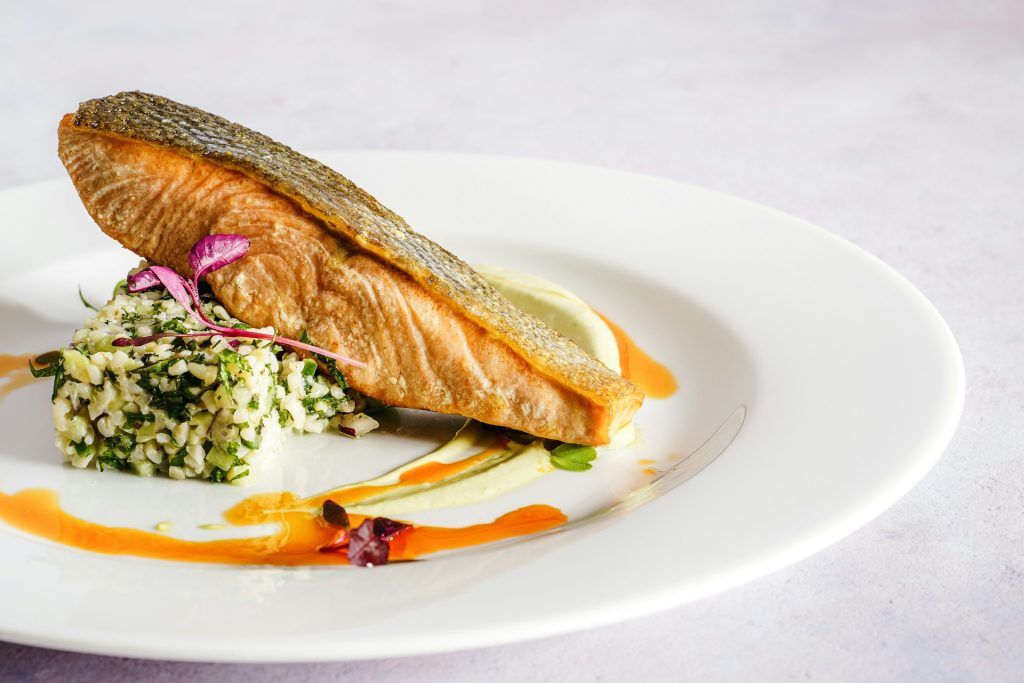
The Fish Society used its customer data platform to segment audiences and create personalized emails based on customers’ level of proficiency in the kitchen – and their culinary preferences. Customers can be segmented by the kind of seafood selected, the content they’ve clicked on, and how many times they’ve purchased.
This allowed their marketing team to nurture buyers, and nudge them along to their next purchase with highly tailored approaches.
Post-purchase emails are tailored to the number of orders they’ve placed, with recipes and cooking videos for inspiration, education, and guidance. Customers who interact with this content get more tailored messages, to drive repeat purchases.
Gamification is also used to boost engagement; buyers get a free utensil with their first five purchases, which make up an exclusive set at the end.
This all resulted in a 16x increase in revenue for the brand [11].
It all comes down to tight segmentation and customer journey email flows – starting with welcome emails. The welcome flow offers subscribers a discount on their first purchase, and subscribers who don’t respond receive an email from the chief executive introducing the company and explaining its ethos. The flow continues by sharing delicious fish recipes and seasonal offers to whet people’s appetite – and only one they convert do they get moved onto a retention email flow.
Next, we’ll look closer at welcome emails as a personalization strategy – and then, another major quick win for conversions: abandoned cart recovery emails.
6. Welcome Sequences (and How to Do Them Yourself)
Welcome emails are disproportionately high value, achieving 68.6% open rates across all industries [12] and a conversion rate 9x higher than typical emails. But so many brands still treat them as an afterthought.
Use the welcome sequence as the start of a journey – not something to win in one hit. A high performing 3 to 5 step automated journey adapts to each subscriber's actions, guiding them to their first purchase.
The most effective sequences follow this kind of story:
- Email 1 confirms the signup, and delivers the promise
- Email 2 shares the brand story and builds connection
- Email 3 adds social proof and builds credibility
- Email 4 drives the next action, often with a gentle incentive
Treat your welcome sequence as a high priority email investment. Map it to a narrative arc, and personalize everything – not just the recipient’s name. Reference how they signed up (direct link, social link, referral), or what they said they were interested in during onboarding, and promise more of that content. Keep subject lines tight, and build the relationship from the first touchpoint.
7. Abandoned Cart Sequences
Across industries, the average cart abandonment rate is 76.8% [13]. That’s a staggering amount of revenue left on the table – potentially $260 billion in recoverable sales! Up to 20% of cart abandonments can be recovered and converted to sales, and the most effective way to do this is through personalised emails, which have open rates of 40% to 45% [13].
The best cart recovery emails remind without being pushy, reduce purchase friction, and add contextual value. They clearly show the product image, a link straight to the cart, and eliminate as many checkout hurdles as possible.
A sequence of 3 emails works particularly well [13]:
Email 1: A Gentle Reminder (Send 2-4 hours after abandonment)
In your first recovery email, show a clear image of the abandoned item(s), reiterate key benefits, and include a prominent “Complete Your Purchase” button. No discount needed here – just a gentle reminder.
Email 2: Added Incentive (Send 24 hours later)
It’s time to gently highlight potential pain points, with information on returns or trial periods, and reassure the customer. This is where a strategic incentive can work, like free shipping or a discount code. Create urgency by noting low stock, or give their incentive an expiration date.
Email 3: Urgency (Send 72 hours later)
In your final email of the sequence, use a stronger subject line (“Your cart is expiring soon!”). Visually emphasize that the items are reserved for them, but won’t last forever. To really drive an action, heighten the sense of urgency by using our top 5 urgency elements in email marketing.
With any abandoned cart sequence, always use image personalization to put the product image as the hero visual. This will reconnect the customer with what they almost bought, and is more powerful than copy alone. And make sure the email links directly to the cart, not the homepage or product page – don't make them hunt for their items again!
Post-purchase, Behaviour-driven Personalization Workflows
The real relationship begins after the sale. This is the make or break period that could mean the difference between a one-time purchase and a customer for life. And it’s important to stick the landing, because post-purchase emails consistently earn among the highest engagement rates [14]. Even automated post-purchase follow up emails can deliver 6.8% average conversion rates [15].
So, stop treating post-purchase emails as purely transactional (order confirmations and shipping updates) – and use them as an opportunity to build a deeper relationship, with personalization at the core.
8. Personalized Offers
Conversion rates can increase by as much as 60% with personalized offers compared to generic ones – and companies excelling in personalization generate 40% more in revenue than those that don’t [16].
So, what are some quick ways to get in on this?
If you’ve sold a consumable or replenishable item, promote repeat purchases by learning your customers’ purchase habits. Offer discounts on their regular buys, or drop them a message if their buying schedule changes:
“You haven’t bought X in a while – time to stock up?”, or, “Get it cheaper – you could save 5% if you buy a 20 pack instead of your usual 5 pack”, for example.
This is the most basic use of segmentation for personalized offers – but you can use your customers’ location and age data, too.
If you’re a fashion brand, and a holiday weekend looks like a washout in a customer’s ZIP code, offer them raincoats. Sentric's email weather widget makes this easy, with dynamic, location-specific weather forecasts in your email campaigns.
If you’re a health and nutrition brand and a customer is celebrating a milestone birthday, offer immune, joint health, or hormone boosting treatments to start their next decade right.
Again, these are just examples. The point is, you need to figure out where your customers are (literally and figuratively), to offer them what they need in the moment. Segmentation is the way to go.
Learn more about collecting and using personalization data
9. Also Bought or Frequently Bought Together
Finally, take a leaf out of Amazon’s playbook – and use the data you have on who bought what. If you have buckets of customers who frequently buy similar items together, then you’ve got a recipe for increased revenue.
By using AI to maximise your email marketing results, you can start building a predictive map of what products or services to offer to customers next, based on behaviours of similar customer profiles.
Combined with predictive timing, this is one of the most powerful, least-hyped applications of AI in email marketing. When you send an email matters as much as what you send.
We’ve written about this in more detail here:
How to Use AI to Maximize Email Marketing Results
Ready to Harness the Power of Personalization? Sendtric Makes it Easy
Sendtric gives you the power to supercharge your email marketing. You get a suite of tools to deploy email personalization tactics, without complex coding or development resources.
With Sendtric, you can easily integrate personalized images that dynamically change based on subscriber data – or countdown timers that display the exact remaining time for a personalized offer. You can generate interactive polls, and weather widgets that pull real-time conditions for localized campaigns.
These widgets are designed to work seamlessly across all major email clients, across desktop, mobile, or tablet, integrating effortlessly with your email campaign platform. Best of all? They’re all included in every pricing tier – even our free plan!

Create your free email countdown timer
- Fill out the form with your desired countdown options
- Click Generate
- Confirm your email address
- Copy and paste the provided HTML code into your email template
- Enjoy your free email countdown timer from Sendtric with 10,000 free monthly views.*
No watermark – Up to 10,000 monthly views* on our FREE Plan
*If you exceed 10,000 free views in a month, a watermark will appear until the limit resets. Upgrade to remove it at any time. Paid plans never show a watermark, even if the limit is exceeded.
Frequently Asked Questions
What is the difference between email segmentation and personalization?
Email segmentation divides a large audience into smaller groups. These groups have shared traits, like demographics or purchase history. Personalization customizes the content of the email for each individual within that group. This is done with dynamic text, images, localized offers, or custom product recommendations.
What is the most effective type of email personalization?
Behavioral personalization – triggering emails based on specific user actions (like abandoning a cart or browsing a product category) – consistently drives the best ROI [19].
How do I personalize emails?
Personalize based on observed behavior (past purchases, browse history, abandoned carts) and stated preferences (survey responses, preference centers). To learn more, read about the fundamentals of email personalization.
Does AI-generated email copy work?
AI is best used for high-volume personalization and prediction – not content generation. In-house content creation still dominates, and 70% of brands continue to create content themselves [17].
How important is mobile optimization for email design?
Critical. 62% of all emails are now opened on mobile devices [18], and emails not optimized for mobile are deleted by 70% of recipients within 3 seconds [14]. Always design with a mobile-first mindset.
Sources
[1] https://codecrew.us/blog/email-marketing-stats-you-need-to-know-the-ultimate-list/
[2] https://www.bloomreach.com/en/blog/email-conversion-rate
[3] https://www.campaignmonitor.com/resources/infographics/24-email-marketing-stats-need-know/
[4] https://www.sendtric.com/create-wrapped-email-with-sendtric/
[6] https://emailmastery.org/teardown/the-grammarly-email-marketing-teardown/
[7] https://hightouch.com/customers/grammarly
[8] https://www.sendtric.com/what-is-email-personalization-with-real-examples/
[9] https://www.rivo.io/blog/sephoras-beauty-insider-program
[10] https://blog.duolingo.com/year-in-review-behind-the-scenes/
[11] https://www.klaviyo.com/sg/customers/case-studies/the-fish-society-email-revenue
[12] https://mailmend.io/blogs/welcome-email-performance-statistics
[13] https://www.sendtric.com/average-abandoned-cart-recovery-rates-2026/
[14] https://www.superside.com/blog/email-marketing-campaign-examples
[15] https://www.bloomreach.com/en/blog/email-conversion-rate
[16] https://www.thetrask.com/blog/hyper-personalization-can-increase-your-conversion-rates-by-up-to-60
[17] https://customer.io/learn/lifecycle-marketing/customer-messaging-playbook
[18] https://genesysgrowth.com/blog/email-open-rates-stats-for-marketing-leaders
[19] https://www.wsiworld.com/blog/why-email-still-delivers-the-highest-roi-in-2026-and-how-to-max-it