
How to Add Countdown Timers to Iterable
Create a countdown in Sendtric, paste it into an HTML block in your Iterable template, and use {{userId}} or a send-time tag for per-user timers.
 First Publish Date: .Last Updated:
Put a live countdown in any Iterable email template in a few minutes.
A Sendtric countdown timer is an animated image that shows the exact time left whenever the email is opened. In Iterable you paste it into a template like any other HTML, and Handlebars fields such as {{userId}} turn it into a personal timer for each user.
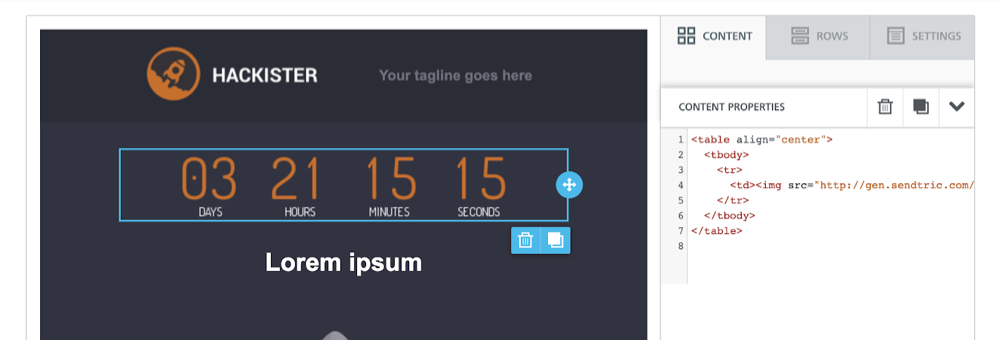
Iterable doesn't have a countdown timer of its own. None of the content blocks in its Drag and Drop editor is a timer, and Iterable's docs suggest getting countdown images from an outside dynamic image service. What Iterable does well is personalization: its Handlebars fields and helpers give Sendtric the user ID and send time it needs for the advanced timer types.
| Feature | Sendtric + Iterable | Native Iterable |
|---|---|---|
| Countdown timer in the email | Yes | No |
| Fixed date and time timers | Yes | No |
| Start-on-Open timers | Yes | No |
| Start-on-Send timers | Yes | No |
| A separate timer for every user | Yes | No |
| Different link before and after the deadline | Yes | No |
| Per-user data through Handlebars | Yes | Yes |
Which countdown timers does Iterable support and what are they used for
All three Sendtric timer types work in Iterable campaigns and journeys:
- Fixed date and time timers: count down to one moment that's the same for everyone, like the end of a sale, a launch or a webinar. No Handlebars needed: copy the code and paste it. Available on every plan, including Free.
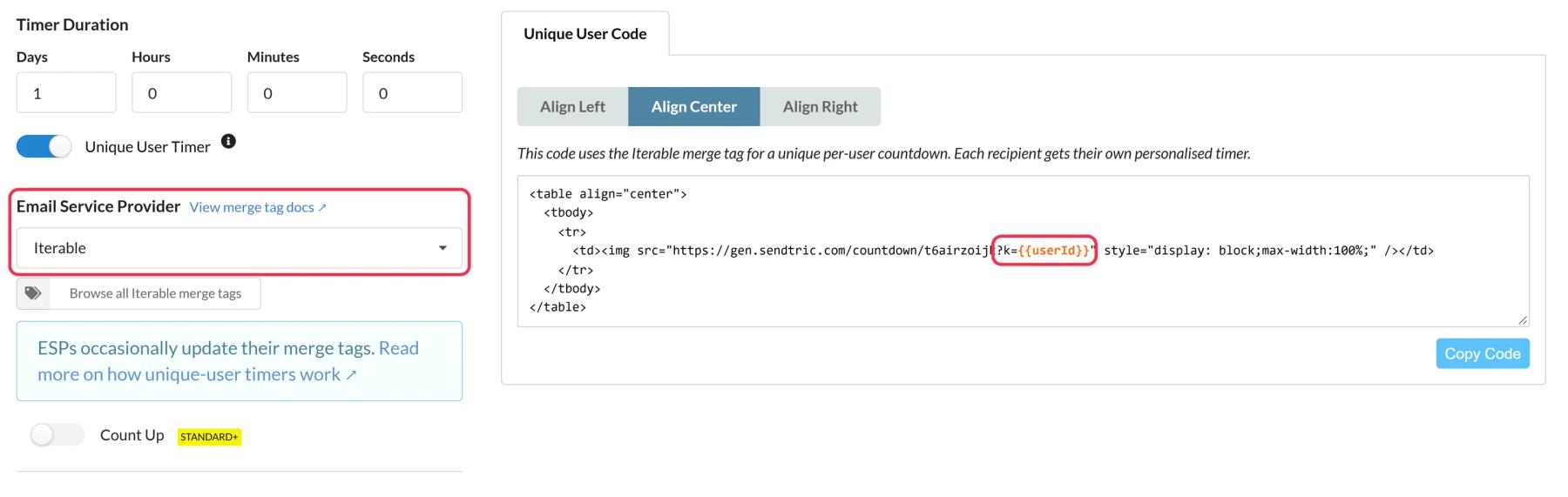
- Start-on-Open timers: start a set countdown, such as 24 hours, from the moment the user opens the email. Good for welcome offers and cart reminders in journeys. Turn on Unique User Timer so each user keeps their own countdown across reopens. In Iterable the unique ID is
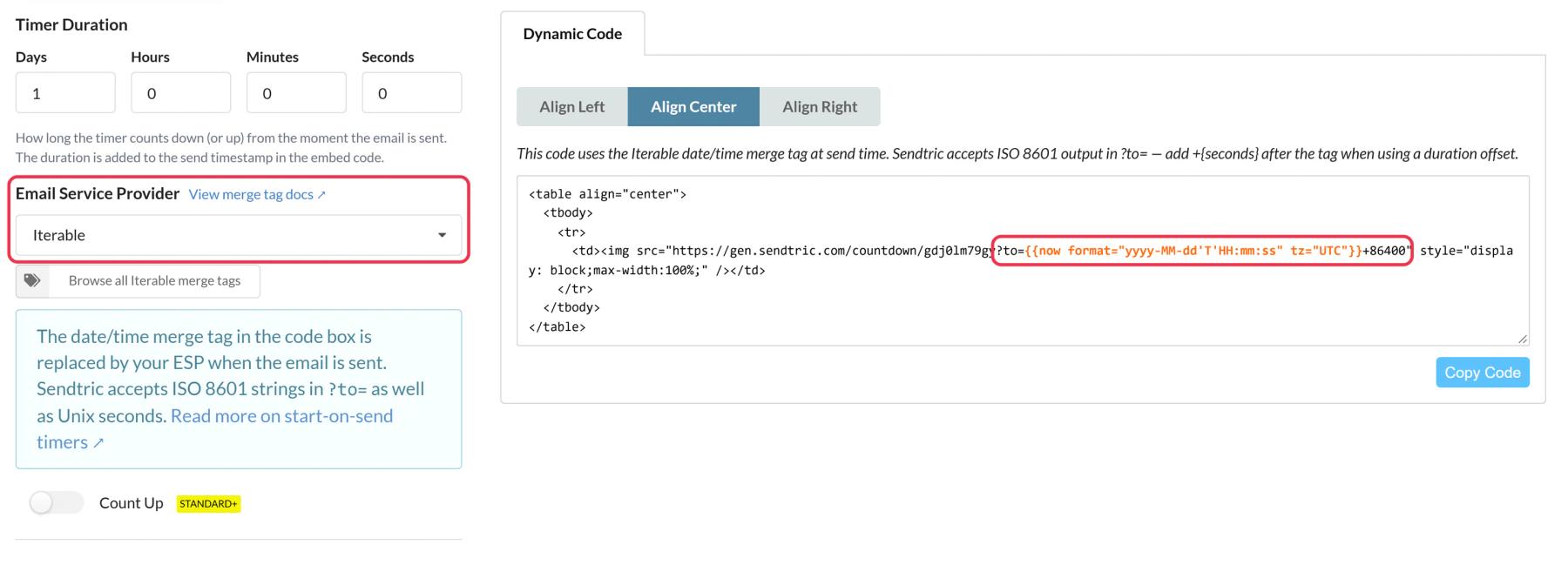
{{userId}}, which Sendtric puts in the code for you when Iterable is your selected platform. Start-on-Open needs Micro or above. - Start-on-Send timers: start the countdown when Iterable sends the email, so a user who opens it a day late sees a day less. Sendtric's Iterable code fills in the send time with Iterable's
nowhelper, in the form{{now format="yyyy-MM-dd'T'HH:mm:ss" tz="UTC"}}. Start-on-Send and event-based Dynamic timers need Power or Enterprise. Our older walkthrough on dynamic timers in Iterable covers the event-based side.
How to add a countdown timer to Iterable
Step 1: Create the timer in Sendtric
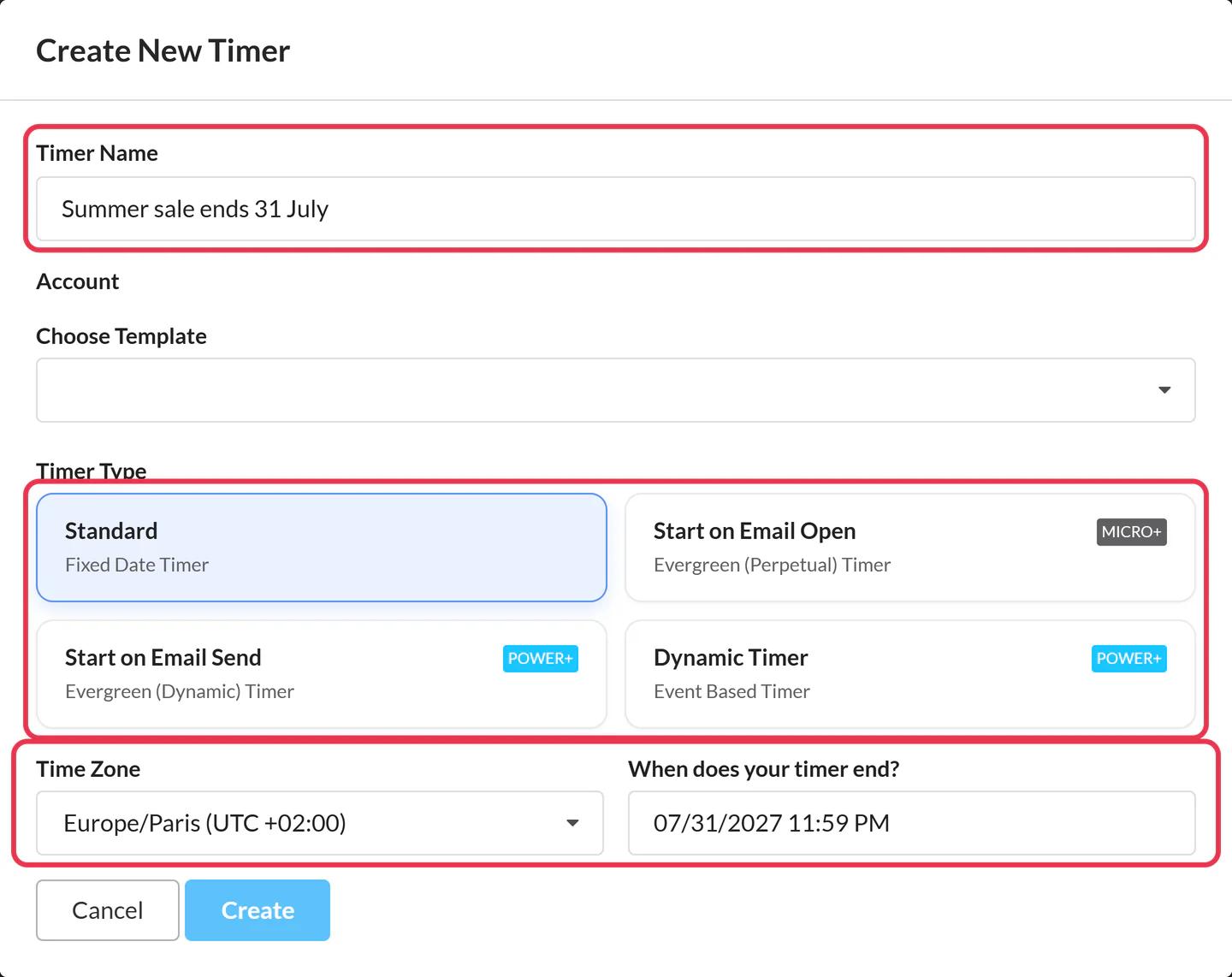
Go to Timers and click Create New. Give the timer a name, pick a Timer Type and set either the end date and time zone or the duration. Click Create, then style it under Visual Design and Save.
Step 2: Choose Iterable for per-user timers
For a unique Start-on-Open timer or a Start-on-Send timer, select Iterable in the Email Service Provider picker. The Unique User Code tab then includes {{userId}}, and the Dynamic Code tab includes the send-time tag. For a fixed date timer, skip this step.
Step 3: Copy the code
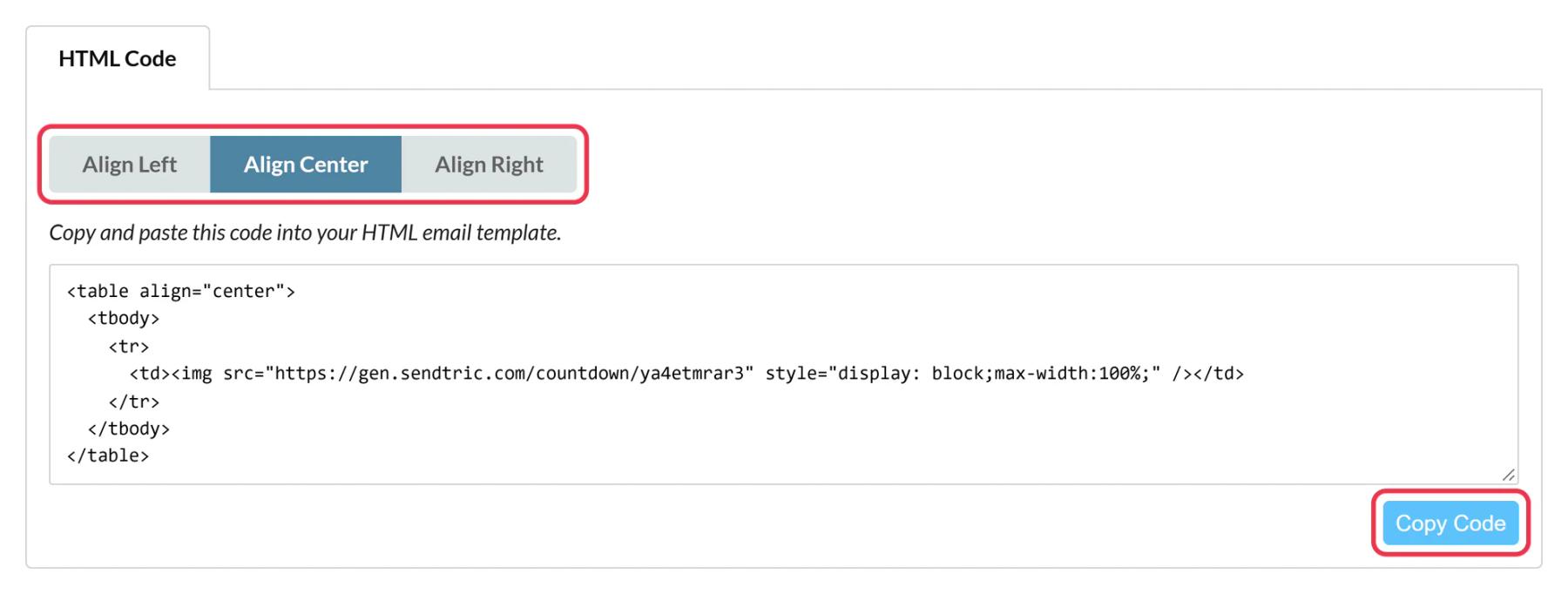
Pick Align Center (or left or right) and click Copy Code. The center option already wraps the timer in a centered table, so you don't need to add your own.
Step 4: Add an HTML block to the template
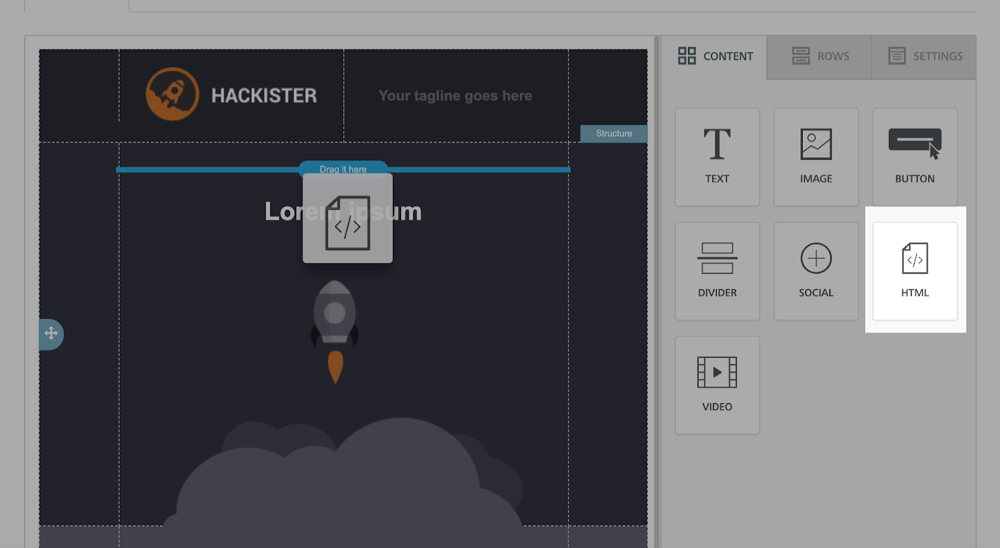
Open the template in Iterable and click Edit design. In the Drag and Drop editor, drag an HTML block from the Content tab into the spot where the timer should go.
Step 5: Paste the timer code
Select the HTML block and paste the code into the HTML editor in the Content tab. Templates built in the WYSIWYG or Side by Side editor take the same code pasted into the source.
Step 6: Send a proof
Click Send proof and choose To yourself. Iterable fills Handlebars in proofs from your own profile, so you can check a unique or Start-on-Send timer with real values. Open the proof, close it and open it again: a unique timer should carry on from where it was.
Check the send-time tag survived the paste
The Start-on-Send tag contains double quotes, and Iterable's docs warn that double quotes inside a double-quoted HTML attribute can make the HTML invalid. After pasting, look at the timer in Preview. If it doesn't load, check the image address wasn't cut off at the tag. The Side by Side editor doesn't alter your HTML, so it's the safest editor for this code.
View-in-browser links and Start-on-Send
Iterable resolves now when it renders the email. If a user opens the web version through {{viewInBrowserUrl}} later, that page is rendered again with a new time, so its countdown can show more time left than the inbox version.
Timer next to text
For a timer beside a headline or button, add a two-column row from the Rows tab and place the HTML block in one column. Use Do not stack on mobile only if both columns still fit on a small screen.
Iterable Countdown Timer FAQ
Which Iterable field should I use for unique timers?
{{userId}}. In hybrid projects, users created with only an email address have an empty userId, and empty IDs would all share one timer. Check Settings > Project Settings to see how your project identifies users.
Do countdown timers work in Iterable journeys?
Yes. The timer is HTML in the template, so it works in journey emails and in blast or triggered campaigns. Start-on-Open and Start-on-Send timers suit journeys best, because every user enters at a different time.
Why does my timer repeat after a minute?
Each open shows 60 seconds of live countdown as an animated image, and email apps replay it. Reopening shows the correct time again. On Power and above you can show an image after the 60 seconds instead. See why timers repeat after 60 seconds.
Do Sendtric timers work in dark mode?
Yes. Some email apps change colors in dark mode, so it helps to plan your timer colors. Our dark mode tips for countdown timers explain how.
Can I change the deadline after the campaign is sent?
Yes. Edit the timer in Sendtric and save. Every email that uses it shows the new time from the next open.
Which plan do I need?
Fixed date timers work on every plan, Start-on-Open needs Micro or above, and Start-on-Send needs Power or Enterprise. Compare everything on pricing, or see how Sendtric stacks up in our timer provider comparison.
What can I use countdown timers for in Iterable?
Sale deadlines, launches, event reminders, trial endings, cart reminders and welcome offers are the most common. There are examples on our use cases page.
This guide covers one piece of Sendtric's email personalization platform. For every countdown timers option and example, see the main page.
More Iterable guides
- Countdown Timers - Add Dynamic Timers in Iterable
- Live Polls - How to Add Live Polls to Iterable
- Personalized Images - How to Add Personalized Images to Iterable
- Rule-Based Images - How to Add Rule-Based Images to Iterable
- Dynamic Weather - How to Add Dynamic Weather to Iterable
- Critical Alerts - How to Add Critical Alerts to Iterable
- Social Proof Counters - How to Add Social Proof Counters to Iterable
Using a different platform? See all Sendtric integrations.