


What’s the psychology behind urgency? What causes FOMO, and is there any way to use it ethically? We’ve studied the data, the tactics, and the science; and there’s a difference between motivation and manipulation. In this post, you’ll get practical copy to boost conversions, and discover tools that create urgency, without compromising trust.
Key Takeaways
- FOMO (Fear Of Missing Out) is a powerful psychological driver that can increase engagement and conversion rates [1]
- Studies find people who experience FOMO are more likely to feel anxious, envious, and dissatisfied [2]. Using it responsibly is a priority
- FOMO can be ethical when rooted in honesty, value, and specific user needs [7]
- The most effective FOMO emails are triggered by real customer behavior [8]: abandoned carts, browsed products, or expiring memberships
- Countdown timers and low stock alerts are proven to increase conversions [8], but have to be used ethically (no spoofing stock or time limits [7])
- You have to balance urgency. If your communication is constantly anxiety-inducing, you’ll lose subscribers fast [9]
What is FOMO?
FOMO stands for Fear Of Missing Out. It’s the anxious feeling you get when other people are having rewarding experiences and you’re not [3].
This can be anything from missing out on an office party, to not buying cryptocurrency. But in marketing, it’s the strategic use of scarcity and social proof to motivate action.
“Everyone’s doing this new thing – but you better hurry because there’s not much time left!”
Why Does FOMO Work in Email
It works because it taps into deep, evolutionary survival triggers: loss aversion, social conformity, and scarcity. “Last Chance” email subject lines on average beat “New Offers” subject lines.
People are motivated more by the fear of losing something than by the prospect of gaining something [1]. We also want to belong, so we commonly (and unwittingly most of the time) conform to the actions of others. Seeing “128 people bought this in the last 24 hours” validates the decision to purchase.
And then there’s scarcity. This can really move the needle, and drive users to commit, because rarity = value in our brains; we can be one of the chosen few.
For email marketers, attention is the ultimate currency. Using FOMO in email marketing hijacks our social survival psychology. It cuts through the noise to provide a clear, compelling reason to open an email and act now, not later.
The problem is, some of the tactics used to generate FOMO in email marketing are, at the very least, “icky”, and at worst, fraudulent.
Most of the FOMO emails sent out by even big brands are totally made up scenarios. There’s no scarcity, no value-add, no real urgency. It’s all just manufactured hype to drive sales. There’s a Black Friday meme that sums it up perfectly:
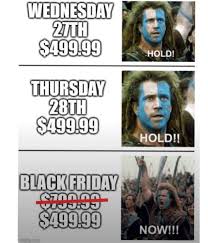
If this is how you’re using FOMO in email marketing, then you’re not doing it ethically. It’s the same trick used by social media algorithms to keep people hooked on screens, damn the cost.
Worse, you might actually be destroying your customer base and subscriber lists [9]: studies find that people who experience FOMO are more likely to feel anxious, envious, and dissatisfied in life [2], which gives them all the more reason to hit unsubscribe…
But FOMO marketing can be ethical when rooted in honesty, value, and specific user needs [7], and works best when influenced by real customer behavior [8].
Hopefully, we’ll be able to give you FOMO on good ways to use the tactic in your emails, that benefit your business long-term, and keep your users coming back.
Ethical FOMO Email Marketing Strategies
Your approach to FOMO in email marketing needs to be squarely focused on the user’s needs and desires. It needs to be tailored and targeted – not catch-all. Ethical use of FOMO in email marketing is achieved by replacing anxiety with excitement and pressure with persuasion [7].
To get into this mindset, follow the user’s journey, and build strategies based on their behavior.
Focus on Abandoned Cart Emails
Abandoned cart emails are hyper-personalized and hyper-relevant. If used wisely, they can trigger hyper-specific FOMO that doesn’t intrude massively on the recipient. It couldn’t be any more ethical if it’s for a product they want!
And abandoned cart email reminders are incredibly effective. In our last post, we discovered that abandoned cart emails have a 45% open rate, and up to 20% of cart abandonments can be converted to sales…
Read more: Average Abandoned Cart Recovery Rates in 2026
How can you add FOMO into this? Well, there’s a few ways that work as standalone tactics that are amplified greatly when mixed in with abandoned carts: low stock, special offers, and new pricing. We’ll detail these separately below.
Low Stock (and Back in Stock) Emails for Previously Browsed Products
Let’s say a customer places an item in their cart, or browses particular products while logged in, but those products are selling fast. Once stock reaches a certain threshold, hit them with an email to say “low stock, hurry!”, and encourage that sale.
Or, if items the customer wants are out of stock, don’t ask if they want a back in stock alert – just give it to them. This way, you’re adding value by giving them what they want, not pestering for a sale. If stock runs are limited, make this clear; there’s a limited time to act, knocking the FOMO factor up a notch.
Limited-time Offers: Countdown Timers
One way to heighten the urgency is to give a definitive timeframe for an offer, and to punctuate it with a countdown timer:

Dynamic pricing, holiday sales, one-time deals… Make them stick by giving a clear time limit. Mageplaza recommends using an actual time frame (48 hours, 72 hours, etc.) instead of a generic “ends soon!” message [6], and timing offers around events (Valentine’s Day, Halloween, and other holidays).
It’s hyper-effective when you combine this with products of interest, either from abandoned carts, or recently viewed items.
Customers Watching or Adding to Carts
This one’s a powerful social and scarcity driver. Mailchimp says;
“Sending real-time updates on product availability, remaining stock, or the number of people viewing a deal can increase the sense of urgency. Seeing an item with a low stock alert on an e-commerce site or seeing hundreds of viewers looking at the same hotel deal can compel users to act quickly before they lose out.” [1]
You can incorporate this into your marketing emails to up the ante on urgency. But with all of this comes a balancing act: too much, and you’ll leave your audience exhausted, anxious, and clamoring for the unsubscribe button. The key is to use compelling copy that gently persuades, with user data to back it up.
Copywriting that Triggers FOMO in Email Marketing
The constant hard sell can trigger a negative reaction from your recipients; they’ll be annoyed and worn down by “HURRY!!!” and “LIMITED OFFER!” emails. According to BBN, all caps, sleazy tactics, and being overly personal are a sure way to land on the blocked sender list [4].
You need to be personal, but personalisation trends are changing. The latest data uncovered by our research on the average email open rates by industry in 2026 found that current best practice is not to use the recipient’s name in the subject line.
Emails with recipient names in the subject line had lower open rates than those without.
Instead, add names only in the email preview and body copy. This keeps things personal and more persuasive, without looking too spammy or leading.
What’s In It For Me?
BBN also pushes for writing benefits over features [4]; what will the reader get out of opening this email, and clicking though?
Brevity
In a mobile-first world, brevity is everything. According to BBN, “Lululemon saw a dramatic 38.5% increase in open rates on emails that had short subject line lengths” [4]. That’s pretty striking.
Email subject lines between 21 and 30 characters gain attention faster by being so short. They also challenge you to analyze every word, keeping the message clear.
Pro tip: Try Omnisend’s subject line tester to check your subject lines against top performers.
Wording
Get specific. According to marketing platform Drip, urgency and persuasion are most effective when numbers are used [5]:
Instead of “Limited Supply”, say “Only 8 Left!”.
Instead of “Offer Ends Soon”, say “Offer Ends Midnight”.
Instead of “Huge Discounts”, say “20% Off Everything” or “$50 Off Your First Order”.
Money, percentages – and time limits. These are the “big three” motivators that make wording pop even harder, to the point where the words play second fiddle to the numbers. People want to save money, and they don’t want to miss a great deal. Combine that with a product they’ve been yearning for, and you’ve got a perfect storm for conversion!
Use Email Widgets to Drive FOMO that Fits
Email widgets are interactive, dynamic elements embedded within emails; things like countdown timers, personalized or dynamic images, and polls.
These elements render when the email is opened, and update in real time. The latest data show that dynamic elements like timers, forms, images, and other relevant content, can have a significant impact on user behaviour.
Countdown timers create a sense of urgency, and drive action based on FOMO.
Countdown Timers in Ecommerce Emails
A countdown timer is a dynamic email widget that displays the remaining time before an offer, sale, or event expires.
Countdown timers improve conversions by taking advantage of three proven human behavioral mechanisms:
Urgency – Reduces procrastination.
Scarcity – Reinforces limited availability.
Attention anchoring – Draws focus immediately after emails are opened.
Create your free email countdown timer
- Fill out the form with your desired countdown options
- Click Generate
- Confirm your email address
- Copy and paste the provided HTML code into your email template
- Enjoy your free email countdown timer from Sendtric with 10,000 free monthly views.*
No watermark – Up to 10,000 monthly views* on our FREE Plan
*If you exceed 10,000 free views in a month, a watermark will appear until the limit resets. Upgrade to remove it at any time. Paid plans never show a watermark, even if the limit is exceeded.
Your timer is ready!
Check your email to get access to the timer's code so you can integrate it in your email campaign and make edits if you wish.
Frequently Asked Questions
What is FOMO?
FOMO means Fear Of Missing Out. It’s the anxious feeling you get when other people are having rewarding experiences and you’re not.
How to use FOMO correctly?
- Above all, serve the user’s needs. Present products they’ve already shown interest in
- Add a countdown timer that clearly shows when offers end
- Show scarcity of items they want, with stock level indicators, but DO NOT fake it
- Center offers around events and holidays
- Balance FOMO with other content to avoid fatigue
What are Some FOMO Copywriting Techniques?
Be specific, and use numbers: say “Sale ends in 2 hours,” or “Only 1 day left”. Show that others are buying or using the product, with alerts to how many people bought in the last hour. Keep it brief, keep it personal – and focus on benefits rather than features.
How Can I Generate FOMO in Email Subject Lines?
Try Omnisend’s subject line tester, a great tool for crafting clickable email subject lines.
Sources
[1] https://mailchimp.com/resources/fomo-marketing/
[3] https://en.wikipedia.org/wiki/Fear_of_missing_out
[4] https://bbn-international.com/how-to-use-fomo-to-expand-your-email-marketing/
[5] https://www.drip.com/blog/promotional-emails
[6] https://www.mageplaza.com/blog/tips-use-fomo-email-marketing.html
[7] https://www.linkedin.com/pulse/marketing-fomo-inspiring-customers-act-confidence-eds-fze-qfejf/
[8] https://www.kimonix.com/post/merchandising-behavioral-triggers